Your body doesn’t shout. Not at first.
It whispers. Through tension. Fogginess. That weird wired-but-exhausted feeling you can’t quite explain.
Maybe it’s 3pm and your brain’s crawling through wet cement… but you keep pushing, because meetings and deadlines won’t wait.
Or maybe you’ve been running on caffeine and autopilot for so long, you don’t even notice how burnt out you’ve become.
These aren’t failures.
They’re signals.
The signs are subtle… until they’re not
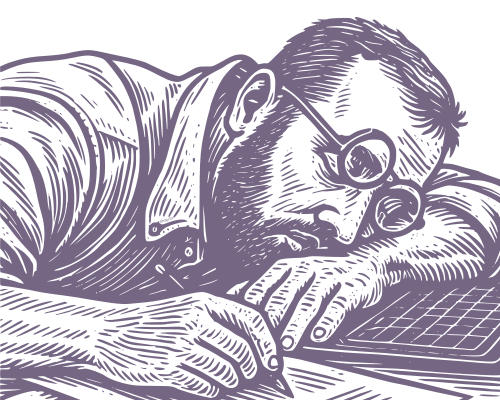
I once ignored what I thought was just a standard headache from too much screen time. Carried on working to meet a deadline. I ended up passing out from pain at my desk. It turned out to be cluster headaches, and I was out of action for days.
That deadline? Didn’t matter.
What did matter was my body trying to get my attention. I just wasn’t listening.
Since then, I’ve learnt to tune in earlier. Not perfectly, not always, but enough to avoid hitting that kind of wall again. Enough to notice when I need to slow down before my body makes the decision for me.
Listening isn’t weakness. It’s prevention.
We’ve been taught to override. To push through. To treat rest as a luxury and productivity as virtue. Especially in work culture. Especially in caregiving.
But your body isn’t being dramatic. It’s giving you a head start. Early warning signs before something bigger breaks.
Sometimes those signs are acute — a jolt of anxiety, a surge of irritability, a pounding head. Sometimes they’re slow creepers: a sense of fog, lack of joy, muscle tension you only notice when it releases. One is like the fire alarm going off. The other is like a battery draining in the background.
Both matter.
Listening doesn’t mean giving up. It means responding sooner, so you don’t have to crash later.
This applies whether you’re juggling client pitches as a founder, burning the candle at both ends as a new parent, or just trying to keep life functional under the weight of invisible pressure.
Simple ways to tune back in
This isn’t about wellness trends or chasing some ideal routine. It’s about reconnecting in simple and practical ways before your body forces a hard reset.
Here are five small shifts that make a big difference. Plus a few cues to help you catch the signals early:
1. Take short, real breaks
Not scrolling. Not snacking at your desk. A real pause. Step outside. Lie down. Breathe.
Why it matters: Mental resets reduce cortisol build-up and improve decision-making. Micro-breaks beat micro-stress.
Early cues to notice: constant sighing, clenched jaw, forgetting what you were doing mid-task.
2. Check in with yourself
Set a reminder or anchor it to meals: “How am I feeling physically, emotionally?” Name it, don’t judge it.
Why it matters: Naming helps regulate emotion. Awareness creates room for agency.
Early cues to notice: short fuse with loved ones, overreacting to small requests, feeling emotionally flat.
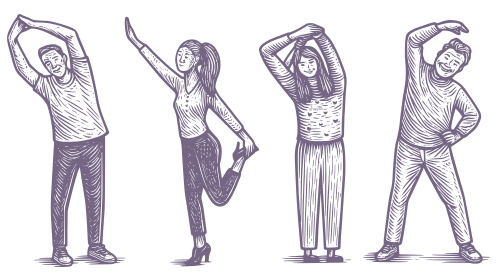
3. Stretch every few hours
Even 30 seconds of shoulder rolls, neck turns, or standing up to reset posture helps your circulation and energy.
Why it matters: Movement regulates your nervous system and keeps blood flow to the brain. Small moves, big effects.
Early cues to notice: hunched posture, neck stiffness, eye strain, tension headaches.
4. Drink water before coffee
Simple, often skipped. Hydration improves mood, focus, and energy.
Why it matters: Dehydration mimics fatigue and anxiety. Water first = clarity faster.
Early cues to notice: foggy thinking, dry mouth, craving stimulants before 10am.
5. Rest when you’re tired
Yes, even in the middle of the day. A 15-minute nap can restore more than caffeine ever will.
Why it matters: Rest builds resilience. Pushing through just compounds fatigue debt.
Early cues to notice: zoning out in meetings, rereading the same sentence, mindless scrolling.
You can’t optimise your way out of exhaustion. But you can learn to respond to your body like it’s on your side… because, guess what… it is.
A better question to ask
If you’ve been overriding your signals for months (or years), try this:
“When was the last time my body tried to tell me something… and I ignored it?”
No guilt. Just curiosity.
This isn’t about bubble baths or meditation retreats. It’s about the basics; eating when you’re hungry, pausing when you’re overloaded, moving when you’ve been still too long. The kind of everyday reconnection that keeps your mind sharp and your body running.
No shame, just awareness
The strongest people I know, the ones who lead well, parent well, build things that last… they don’t always get it right. They mess it up, same as the rest of us. But they’ve learnt to course-correct faster. To take the signals seriously.
Truth is, I still mess it up too.
I push too far. I forget to eat. I ignore the tension in my back until I’m grumpy ‘for no reason’.
Sometimes it’s my wife who notices. Sometimes it’s my six-year-old who gives me a reality check. Either way, I’m lucky to have people around me who pull me up when I’ve gone too long without listening.
My work with Harbor + Orchestrate keeps this front of mind. It’s high-end mental healthcare, the kind where nothing is spared to create the right conditions for recovery. Our patients are among the wealthiest people in the world. They have access to everything. And yet, the pattern still holds: whispers ignored become screams. Wealth doesn’t prevent burnout. It doesn’t make you immune to ignoring the signals.
I wish this level of care was accessible to everyone, not just those who can afford it. But the lessons apply regardless of circumstance: listen earlier, respond sooner, course-correct faster.
That’s not weakness.
That’s wisdom… still in progress.